Do You Have to Report Everything You Find Metal Detecting in the UK?
The legal line drawn by the Treasure Act 1996 is precise: only objects at least 300 years old and containing at least 10% precious metal by weight must be reported[6][7][11]. Yet the recording norm encouraged by the hobby’s own code of conduct and the Portable Antiquities Scheme extends far wider, covering finds of archaeological interest regardless of metal content. This gap between legal compulsion and responsible practice is where most detectorists operate daily.
Understanding where these two lines fall allows you to participate confidently. While Victorian buttons, iron nails, and bronze buckles can be legally kept, knowing the precise trigger for mandatory reporting ensures compliance with heritage law.
When the Law Requires a Report
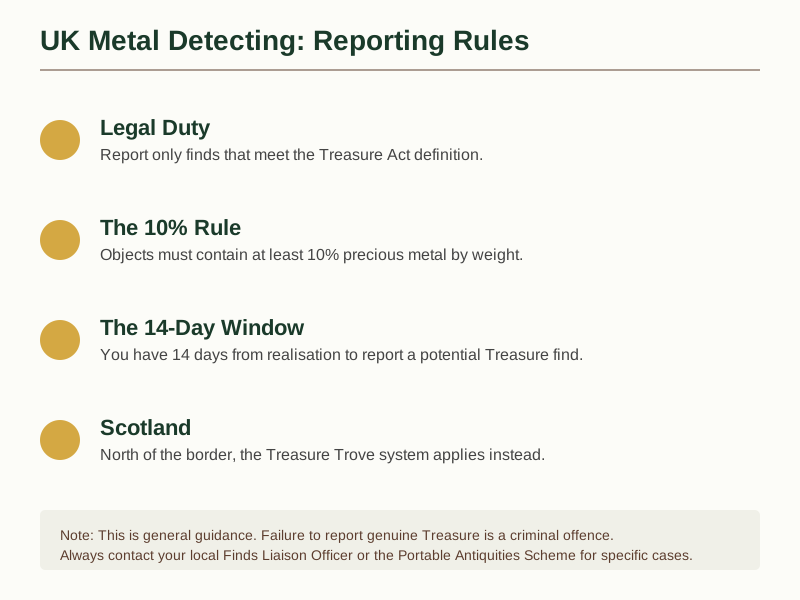
The Treasure Act 1996 establishes the reporting duty for England, Wales, and Northern Ireland[2][6][8]. The criteria are specific: for a single object, it must be at least 300 years old and made of at least 10% precious metal by weight[6][7][11]. This metallic threshold means a historically significant Bronze Age spearhead won’t qualify unless it contains the requisite gold or silver.
Once you believe an item might be Treasure, a 14-day reporting window begins from the day after this realisation[2][6][7]. Report the find to your local Finds Liaison Officer (FLO) or through the Portable Antiquities Scheme (PAS) website at finds.org.uk[2][4][8]. Failure to report a qualifying item is a criminal offence[6][7], highlighting the seriousness of this specific duty.
The Voluntary Path: Recording Beyond the Law
The legal requirement is narrow, but good practice is broader. If an item doesn’t meet the Treasure criteria, the law imposes no duty to report it.
The Portable Antiquities Scheme, operated by the British Museum with local authorities, exists separately from the legal framework[8][9]. Its purpose is to record finds of archaeological interest, regardless of Treasure status. Providing a landowner with a formal PAS record for a significant non-Treasure find demonstrates responsible conduct and contributes to historical knowledge. This evidence can help secure ongoing permission.
Scotland follows a different system called Treasure Trove, administered by the Treasure Trove Unit[1]. Detectorists in Scotland should consult guidance at treasuretrovescotland.co.uk.
How Conduct Builds Access
The National Council for Metal Detecting (NCMD) promotes a code of conduct that often goes beyond legal minimums[1]. This code advises securing written landowner permission, sharing information about historical finds, and adhering to the 14-day Treasure reporting rule[1][5].
📺 Watch: HOW TO GET FARMERS PERMISSION. A GUIDE FOR BEGINNER METAL DETECTORISTS (UK) — Addictedtobleeps
Securing explicit permission is fundamental. The NCMD guidance emphasises obtaining consent directly from the landholder[1][5]. It’s also wise to confirm this permission includes agreement to record significant finds with the PAS[1][5].
Creating a documented history of finds for a property can transform a detectorist from a casual visitor into a documented contributor. This approach helps build the kind of reputation that keeps permissions open.
Ensure you’re fully prepared: Get the Free Metal Detecting Permission & Reporting Checklist to streamline your permissions and understand your obligations.
If You Uncover a Potential Treasure Item
If you find something that might be Treasure, follow this procedure:
- Don’t clean it. Leave the object undisturbed. Soil and patina provide vital contextual evidence. Cleaning before assessment can risk damaging surface detail that affects identification.
- Take clear photographs. Capture images from different angles, showing any markings or decorative elements.
- Contact your FLO promptly. Use the PAS online form at finds.org.uk or get in touch with your local Finds Liaison Officer[2][4][8].
The 14-day reporting period is fixed[2][6][7]. The FLO guides you through the determination process, and there are no fees for reporting. Avoid delaying or concealing finds—these actions don’t negate the legal duty.
Addressing Common Uncertainties
Do Roman coins always count as Treasure?
No. Only Roman coins made of gold or silver that are at least 300 years old qualify. The commonly found bronze Roman coins don’t meet the statutory definition and can be legally kept[6][7][8]. Metal composition is the deciding factor.
What are the consequences of not reporting?
Failing to report a qualifying find is a criminal offence under the Treasure Act 1996[6][7]. The obligation is precise and the timeframe short. When in doubt, report the find and let the FLO provide a definitive assessment.
Does having permission change my reporting duty?
No. The legal duty to report Treasure is independent of landownership. Permission grants you the right to detect on the land but doesn’t alter your responsibilities under treasure law.
Finding Your Path Forward
For the newcomer worried about reporting every button: the law’s line is clear and narrow. For the experienced detectorist already recording with the PAS: your practice confirms the wider norm of responsible conduct.
Before your next outing, ensure you’re prepared for whatever you might discover. Get the Free Metal Detecting Permission & Reporting Checklist to clarify your obligations and build trust with landowners.
Related Guides
For a complete overview, see our What Counts as Treasure Under UK Law? The Treasure Act 1996 Explained .
References & Useful Links
- National Council for Metal Detecting (NCMD) Code of Conduct
- GOV.UK: Report treasure
- Portable Antiquities Scheme (PAS) advice for finders
- Portable Antiquities Scheme reporting
- NCMD Policy No. 4: Code of Conduct (PDF)
- Treasure Act 1996, Section 1
- Treasure Act 1996, Section 8
- PAS: What is Treasure?
- British Museum: About the PAS
- Historic England: Metal Detecting
- The Treasure (Designation) Order 2002
- GOV.UK: Report treasure
- Scottish Treasure Trove Unit
- Treasure Act 1996, Section 8