What to Do If You Find Something Valuable While Metal Detecting in the UK
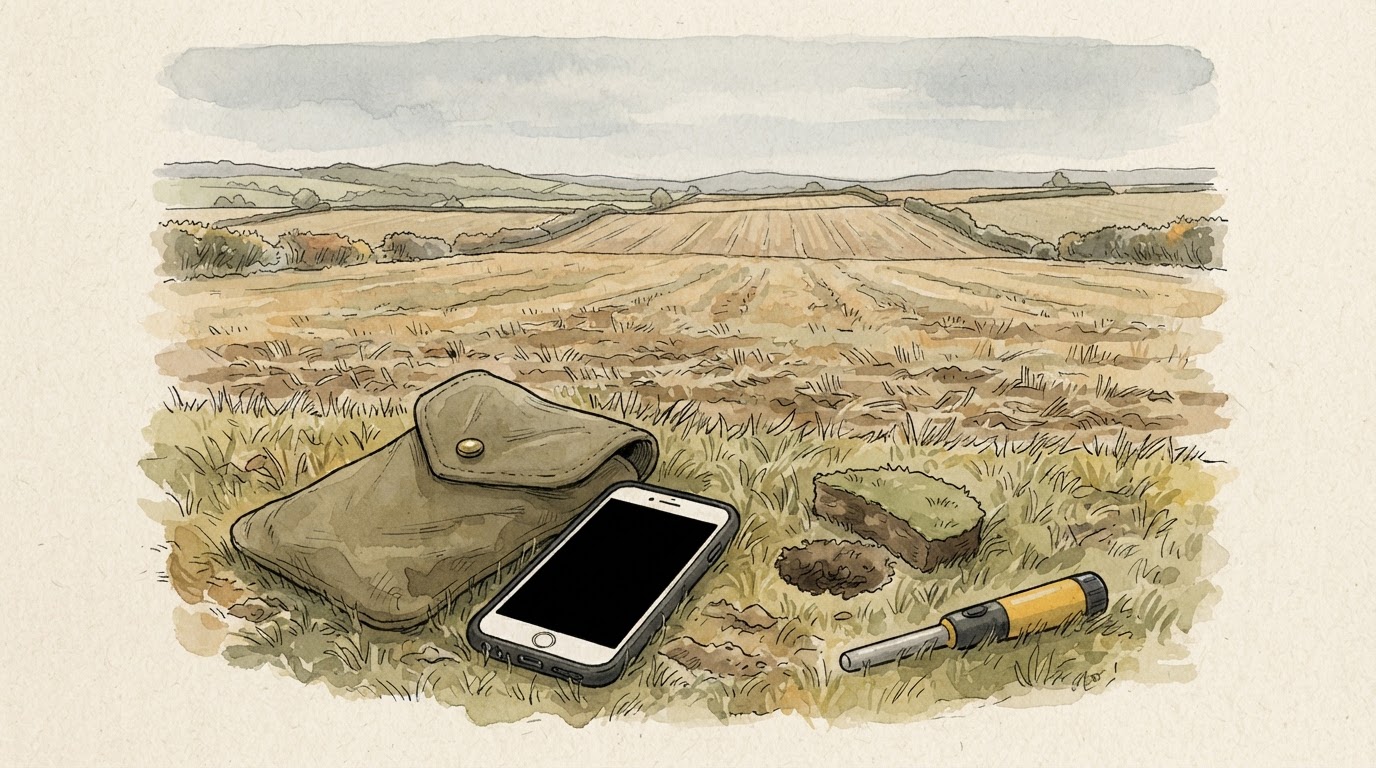
You lift a muddy object from the soil. It could be anything from a scrap of foil to a significant historical find. In that moment, two questions become critical in sequence: does your agreement with the landowner cover this discovery, and does the object meet the legal criteria for treasure? The answers shape everything that follows, from immediate documentation to potential legal obligations.
Land Ownership: The Foundation of Every Find
The law is clear: anything discovered in the ground belongs to the landowner. The National Council for Metal Detecting (NCMD) code of conduct states that detecting without permission is trespass. Taking an object without consent could be considered theft. This principle splits the path ahead:
📺 Watch: How To Get Metal Detecting Permission — The Dukes Of Derbyshire
- Treasure finds meeting the Treasure Act 1996 criteria become Crown property during the reporting process. The finder has a legal duty to report them.
- Non-treasure finds, from modern coins to common artefacts, belong entirely to the landowner. Any arrangement for the finder to keep them must be agreed in advance.
Written permission is essential. Public right-to-roam access does not grant the right to search or remove items. Protected sites like scheduled monuments require specific consent; detecting on them without authorisation is illegal.
When a Find Becomes Treasure
The Treasure Act 1996 provides a precise legal definition. An object qualifies only if it fits one of these categories, triggering the reporting requirement.
📺 Watch: WHAT IS TREASURE ? UNDERSTANDING The UK Treasure Act 1996 #treasure — The Solo Searcher
The main criteria are:
- Objects over 300 years old with at least 10% gold or silver content. This covers individual items like coins, jewellery, or ingots.
- Groups of objects over 200 years old with a collective precious metal content of 10% or more.
Understand the boundaries. A Victorian penny isn’t treasure due to its base metal, while a silver Roman coin likely is. A Bronze Age copper axehead usually falls outside the standard definition, though specific rules apply to some prehistoric base-metal assemblages. If in doubt, contact a Finds Liaison Officer for assessment.
The reporting window is strict. Under the Treasure Act code of practice, you have 14 days from the day after discovery, or from when you first realise an item might be treasure, to report it to the local coroner via the Portable Antiquities Scheme (PAS). Not reporting is a criminal offence.
Your First Minutes at the Findspot
The most important actions happen before the object is moved. Good documentation preserves archaeological context, which is lost forever upon retrieval, and can influence the find’s assessed significance.
Resist the urge to immediately pick it up. Instead:
- Photograph the find in situ. Take shots from various angles, including a scale item like a coin or ruler. This records the object’s position.
- Pinpoint the location. Use a GPS or smartphone map for a six-figure grid reference. The PAS uses this data for research.
- Note the conditions. Record soil type, depth, and any associated objects or features.
This groundwork helps a Finds Liaison Officer assess whether an object was part of a hoard or a casual loss. Clear provenance can contribute to a find’s historical significance.
Dealing with Non-Treasure Items
Many discoveries feel important but aren’t legally treasure. This includes modern coins, common buttons, and other non-precious metal items. There’s no legal duty to report these.
However, “not treasure” doesn’t mean “valueless.” A Victorian bronze coin or Georgian buckle might have collectable worth. This value belongs to the landowner unless a different arrangement was made beforehand.
Many detectorists and landowners agree on a fair split for valuable non-treasure finds, sometimes 50/50. This customary arrangement helps maintain positive relations, which is key to retaining permission. Typically, low-value items like modern coins are kept by the finder, while more valuable non-treasure items are shared. The crucial point is to have this agreement clearly established in writing before you start detecting.
Reporting a Treasure Find
If your find meets the criteria, follow this procedure.
Step 1: Contact your local Finds Liaison Officer (FLO). The FLO, part of the Portable Antiquities Scheme, offers expert advice on whether a formal report is needed and guides you through the steps.
Step 2: Submit a formal report. Your FLO helps complete the required Treasure Questionnaire for the coroner. The 14-day reporting clock starts from the day after the find or the realisation of its potential status.
Step 3: Independent valuation. If declared treasure, the relevant authority arranges for an independent panel to assess its market value. The documentation you provided contributes to this.
Step 4: Acquisition and reward. If the Crown acquires the find, the reward is generally split equally between the finder and the landowner. If the Crown disclaims interest, title typically reverts to the landowner, who may then agree for the finder to keep it.
Common Questions Answered
What about an old coin that isn’t treasure?
If a coin, like a post-1700 base metal issue, doesn’t meet the statutory criteria, it is not treasure and there’s no legal duty to report it. As the landowner owns it, showing them the find is good practice. For more valuable non-treasure coins, follow your pre-agreed arrangement, which might be a 50/50 split.
What are the risks of not reporting treasure?
Failing to report a treasure find is a criminal offence under the Treasure Act 1996. The penalties can include confiscation and prosecution. If you’re unsure, contacting your FLO is the safest course.
Does the landowner share in non-treasure finds?
Legally, yes—the landowner owns all non-treasure finds unless an alternative agreement exists. A customary split for valuable items is a practical way to maintain good relations.
Is detecting allowed on National Trust land?
Typically, no. The National Trust’s management policies aim to protect the historic environment and it seldom grants permission for metal detecting. Public access rights do not include the right to detect.
What is the rule for finds on the foreshore?
The situation is different. The Crown Estate, which generally owns the seabed, permits metal detecting on much of the foreshore but advises checking their website for specific areas and restrictions. The application of the Treasure Act can also vary. Always check the rules for a specific foreshore area before detecting.
Comparing Find Categories
| Category | Age | Metal Content | Ownership | Reporting Duty |
|---|---|---|---|---|
| Treasure | 300+ years (objects) or 200+ years (groups) | 10%+ gold or silver | Crown (until acquired) | Yes, within 14 days |
| Non-Treasure | Any age | Base metal or non-precious | Landowner (unless agreed) | No |
| Prehistoric Base Metal | 200+ years | Copper or bronze | Landowner | No |
| Modern Coins | Post-1700 | Any metal | Landowner | No |
| Hoards | 200+ years | 10%+ gold or silver | Crown (until acquired) | Yes, within 14 days |
The Retrospective Importance of Your Agreement
The landowner agreement you signed before the dig is the document that ultimately determines what happens next with a valuable find. Its clarity on ownership splits and obligations makes the pre-dig paperwork critically important in hindsight.
Get the Free Metal Detecting Permission & Reporting Checklist to ensure your agreements and reporting knowledge are correctly set up from the start.
Related Guides
For a complete overview, see our What Counts as Treasure Under UK Law? The Treasure Act 1996 Explained .
Sources and Further Reading
- The Portable Antiquities Scheme (PAS)
- The Treasure Act 1996
- National Council for Metal Detecting (NCMD)
This guide offers general information based on UK law. For definitive advice on specific situations, consult the relevant official authority or a qualified legal professional.