Hammered vs Milled: How to Tell the Difference
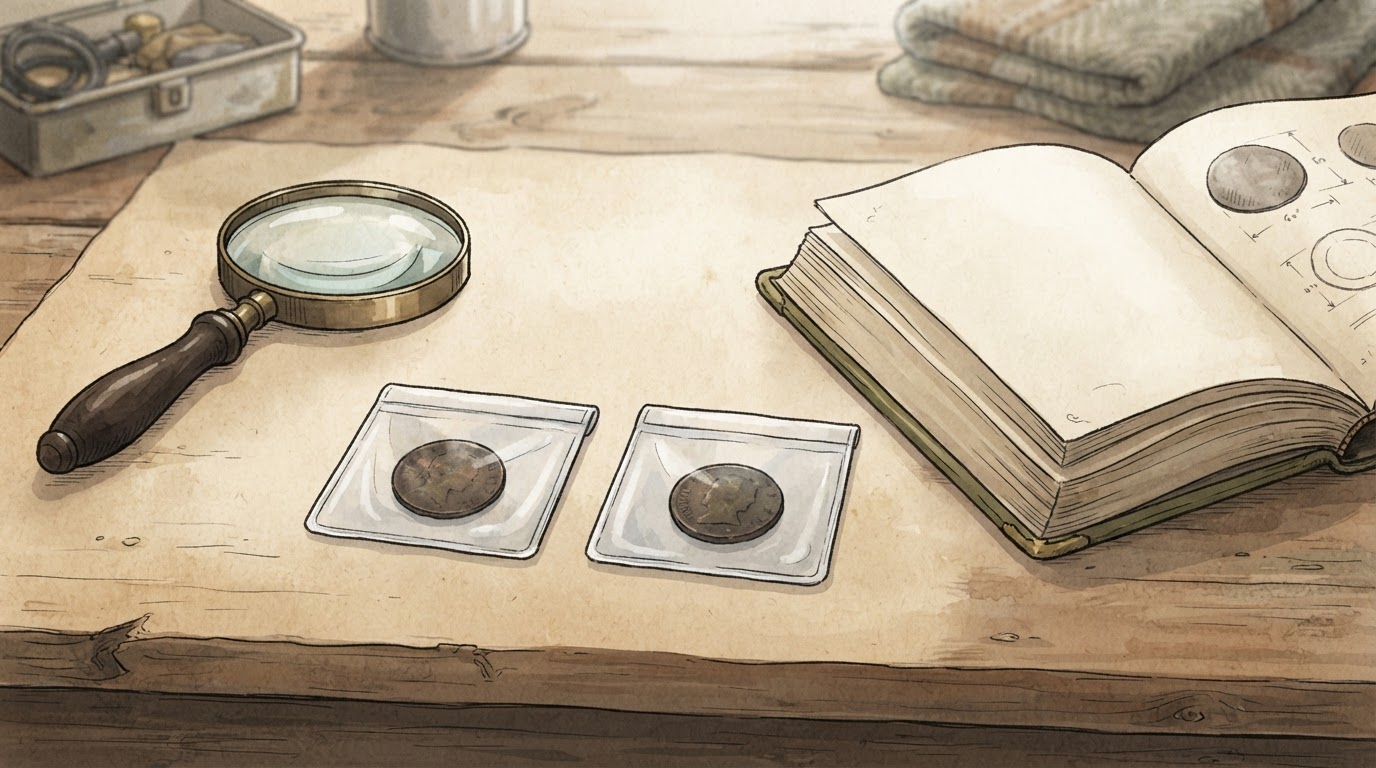
Run a fingernail around the edge of a hammered coin and you’ll feel the subtle ridges and dips of an irregular, hand-struck rim. Do the same on a milled coin and your nail glides smoothly along a perfectly machined, uniform reeding. That tactile difference is the first and most durable clue to a coin’s origin, long after portraits fade and dates wear smooth.
Hammered coins, struck by hand, show irregular edges with visible clipping marks, as described in historical references from the Royal Mint. Milled coins, made by machine, have perfectly round, uniform rims, a result of early screw-press technology. This manufacturing signature often outlasts the coin’s design.
The mechanics behind the edge
The physical feel of a coin’s edge is a direct result of how it was made.
Hammered coins started as a metal blank placed between two engraved dies. A worker struck the top die with a hammer, forcing the design onto the metal. Without a collar to contain the blank, the metal spread unevenly, creating irregular shapes. Many were then trimmed or filed to achieve a roughly circular form, leaving distinctive marks.
Milled coins were produced using a screw press. The blank was held within a metal collar during striking, which prevented the metal from spreading outward. This process created a perfectly round coin with a characteristic bevelled edge.
Both types circulated together for decades. Milled coinage saw limited introduction under Elizabeth I in the 1560s and again in the 1630s, before becoming standard from 1662, according to numismatic sources. Hammered coins continued to be used for some time after production ceased, meaning finding both types from the same period is possible.
A guide to reading the rim
When surface details are lost, the edge becomes your primary identification tool.
For a hammered coin, look for:
- An uneven, irregular rim
- Visible filing or clipping marks
- A scalloped or notched appearance
For a milled coin, expect:
- A perfectly uniform, circular edge
- A smooth, bevelled rim from the collar
Feeling the edge with a fingertip can reveal the tell-tale texture. Even heavily worn hammered coins can appear round from above, so always inspect the rim profile directly.
What the manufacturing method tells you
Identifying the production method provides a broad date bracket.
Hammered coins were the standard in Britain for centuries. A hammered find generally dates from before the widespread adoption of milling.
Milled coins became standard after 1662 under Charles II, though rare early examples exist from the 1560s and 1630s. A milled edge almost certainly indicates a post-1662 coin, with the earlier issues being exceptionally rare finds.
This dating helps place your discovery within the history of a site.
Identification and legal responsibilities
Correctly identifying a coin as hammered or milled is the first step in determining its potential status. The Treasure Act 1996 does not distinguish between coins based on manufacturing method. Instead, it defines treasure by age, precious metal content, and whether items are found as part of a group. A single coin is rarely treasure on its own; a group of two or more coins from the same find meeting age criteria may qualify. The Act operates under a Code of Practice, which is updated periodically—always check the current version on the GOV.UK website.
If you suspect a find might be treasure, do not clean it. Contact your local Finds Liaison Officer for guidance. Cleaning can remove the patina that specialists use for identification.
You must always have landowner permission to detect. Metal detecting is generally not permitted on open-access land designated under the Countryside and Rights of Way Act.
Quick identification guide
| Feature | Hammered Coin | Milled Coin |
|---|---|---|
| Edge Texture | Irregular, often with filing marks | Uniform and smooth |
| Overall Shape | May be slightly uneven | Perfectly round |
| Manufacturing | Hand-struck between dies | Machine-made in a collar press |
Common questions answered
Can I use the date to tell if a coin is hammered or milled? Not reliably. Milled coins existed as early as the 1560s, while hammered coins continued circulating alongside them for over a century. The edge provides a more accurate indication.
Are all hammered coins considered treasure? No. Treasure status depends on the coin’s age, material, and whether it’s part of a group find. A single hammered coin is not automatically treasure.
Should I clean a coin before identifying it? It’s best not to. Cleaning can damage the surfaces that experts use for identification. If you think a find might be reportable, contact a Finds Liaison Officer first.
The edge test requires no special tools—just a careful look at the rim. Once you know what to look for, you can confidently identify your finds.
Further resources
Related Guides
For a complete overview, see our How to Clean Metal Detecting Finds Without Damaging Them .
Recognising a hammered or milled edge is the first identification step that determines whether a find enters the Treasure Act reporting pathway, making it a legal skill as much as a historical one. Get the Free Metal Detecting Permission & Reporting Checklist to navigate the identification-to-reporting chain correctly.