Can You Keep What You Find Metal Detecting in the UK?
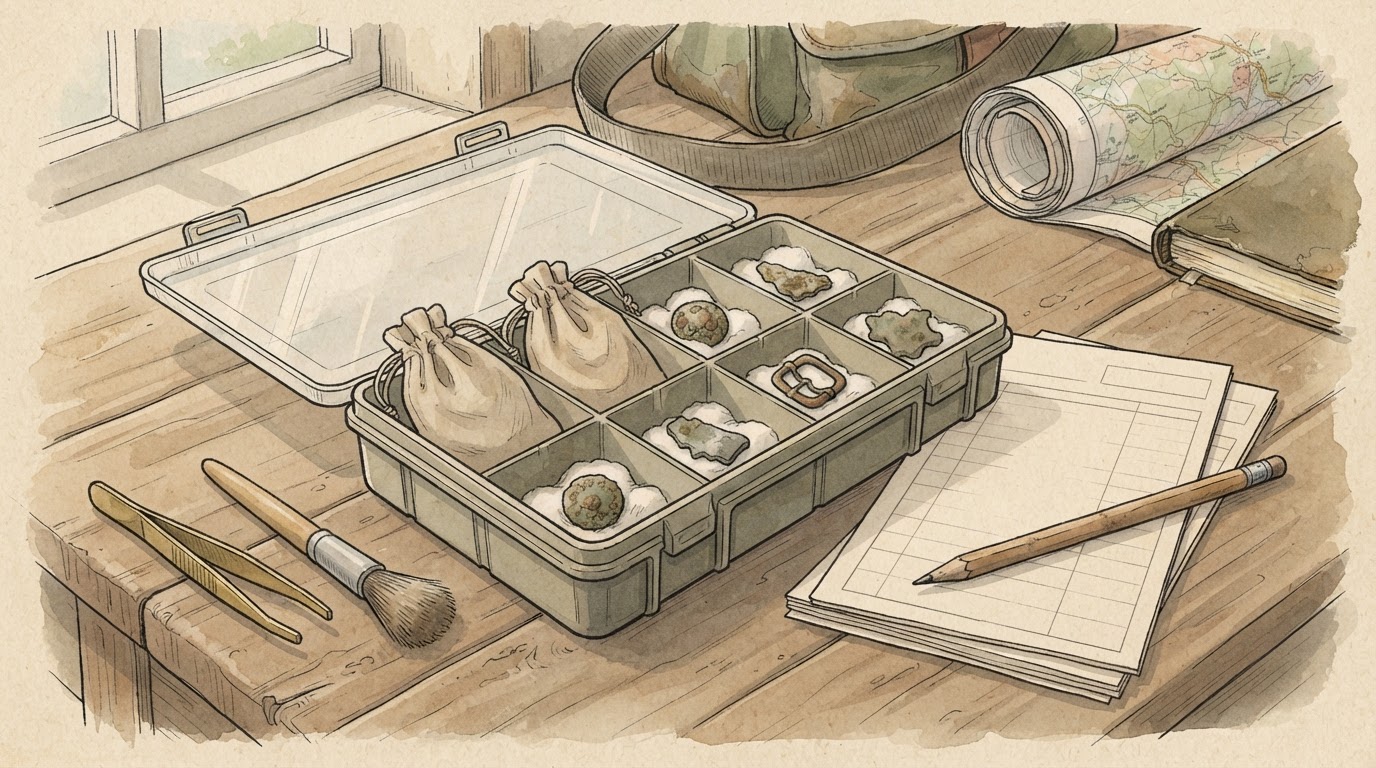
A metal detectorist finds a silver coin. The landowner who granted permission watches from the gate. Legally, the Crown holds a potential claim. This chain of ownership—detectorist, landowner, Crown—with the find’s status deciding which claim is superior, is the reality that makes ‘finders keepers’ a myth. The “finders keepers” principle has no legal standing. Without proper landowner permission, you’re trespassing by removing anything from the soil. For finds meeting the legal definition of treasure, you must report them within 14 days, but you and the landowner may receive a market-value reward. Understanding this framework protects both you and the archaeological record.
Most everyday discoveries—modern coins, buttons, bits of lead—are not treasure. These belong to the landowner, who can let you keep them if you have permission. Anything meeting the legal definition of treasure, however, belongs to the Crown and must be reported. Knowing the difference between these two categories is essential before you swing a coil.
The legal reality of finder, landowner, and Crown
UK law is clear: landowners own what’s in their soil. Detecting on private land without permission and removing finds constitutes trespass, and taking someone else’s property can be viewed as theft. This isn’t a remote possibility; it’s the actual legal position.
📺 Watch: How to Gain new detecting permission. — Unearthed Detecting TV
The National Council for Metal Detecting (NCMD) code of conduct is unambiguous: you need landowner permission before detecting. If there’s a tenant farmer, you need their consent as well. While a written agreement provides the clearest protection, the fundamental requirement is demonstrable consent. Without it, you have no right to remove anything.
Many beginners mistakenly believe that public footpaths or right-to-roam access under the Countryside and Rights of Way Act also permit metal detecting. They don’t. The legislation creating these access rights excludes activities that disturb the ground or remove objects. A public footpath is for passage, not for searching.
In practice, many detectorists and landowners agree informally that the detectorist keeps low-value items. This arrangement works, but it’s not a legal right. The NCMD recommends getting the terms in writing to avoid ambiguity later.
Parks and public green spaces aren’t a free-for-all either. These are typically owned by local authorities or other public bodies, and detecting on them requires explicit permission, just like private farmland.
Build your detecting on solid ground: Permission isn’t just a formality—it’s the foundation of lawful detecting. If you’re unsure how to approach a landowner, Get the Free Metal Detecting Permission & Reporting Checklist for a step-by-step guide on what to say and what to put in writing.
What the law defines as treasure
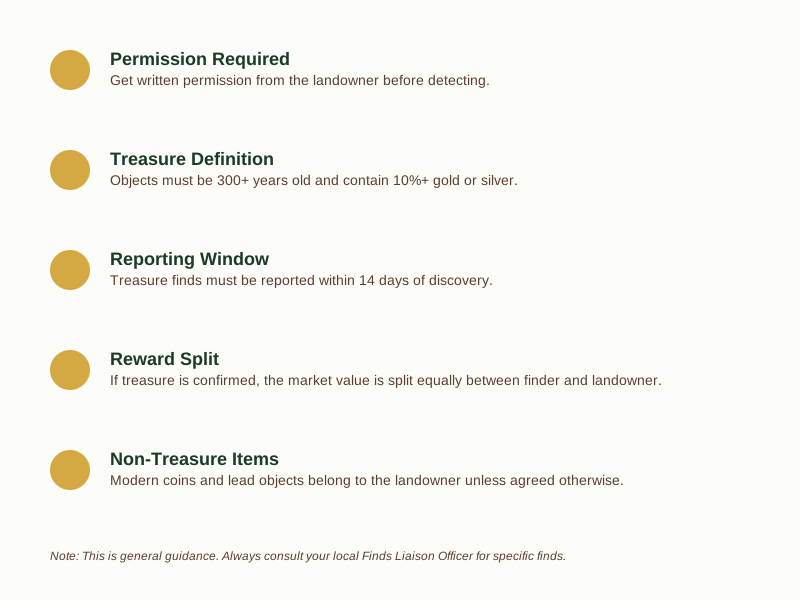
The legal definition is precise. Under the Treasure Act 1996, an object qualifies as treasure if it is at least 300 years old and contains at least 10% precious metal by weight (gold or silver). This definition also covers groups of coins from the same find that are over 300 years old, and certain prehistoric objects made of base metal.
📺 Watch: Treasure: Is 'Finders Keepers' the law? — Daniel Barnett, Barrister
The clock for reporting starts from the day after you find the object, or from the day you first believe it might be treasure—whichever is later. If you dig something up, put it aside, and only later realise its potential significance, the 14-day reporting window starts from that moment of realisation. Failing to report is a criminal offence.
Once reported, the coroner oversees the process. If confirmed as treasure and a museum wants to acquire it, the Treasure Valuation Committee sets the market value for the reward. If no museum is interested, the Crown usually waives its right, and the object can be returned to the finder, subject to the reward agreement with the landowner.
Common finds like modern coins, bottle caps, plain iron objects, and most unalloyed lead or copper items do not qualify as treasure. The definition requires both significant age and precious metal content. A rusty 19th-century iron nail isn’t treasure, no matter how old it looks. If you’re unsure, the safest approach is to report the find to your local Finds Liaison Officer (FLO) for an assessment.
How rights and rewards are allocated
With permission secured, the legal framework splits into two distinct paths.
For non-treasure finds—anything that doesn’t meet the legal definition of treasure—common law applies. The landowner owns the objects. Your permission letter should specify what happens to these finds. Most landowners are happy for detectorists to keep the ordinary, low-value items. This covers the vast majority of what you’ll dig up.
Treasure finds operate under a completely different system. The Treasure Act 1996 states that treasure vests in the Crown. This means the Crown has the primary claim, superseding both the finder and the landowner. You cannot keep a treasure find simply because you found it.
The landowner’s underlying ownership of the soil is recognised, but the Crown’s claim to the treasure itself takes precedence. If the find is acquired by a museum, the Treasure Valuation Committee assesses its market value. A reward is then paid, typically split equally between the finder and landowner.
So, the committed verdict is clear: you can keep non-treasure finds because the landowner, who owns them, can gift them to you. Treasure, however, belongs to the Crown. You may only keep it if no museum wants it and the Crown waives its right—but even then, the landowner is entitled to a share of the reward. This chain of ownership is why permission and reporting are non-negotiable.
Steps to take in the field
Follow this sequence to stay on the right side of the law during every outing.
📺 Watch: Code of Practice for Responsible Metal Detecting in England and Wales — Portable Antiquities Scheme
- Secure written permission first. This is the essential first step that makes everything else lawful. Confirm what will happen to the finds.
- Record the findspot meticulously. Note the grid reference and depth. This information is vital for archaeological context and will be required by the FLO for any potential treasure.
- Assess finds in the field. When you dig something up, look at it carefully. Does it appear old? Could it be silver or gold? If there’s any doubt, err on the side of caution and plan to report it.
- Clarify non-treasure finds with the landowner. Even for modern coins or buttons, a quick check confirms you have their consent to keep them. Most are agreeable, but don’t assume.
The most common regret among detectorists is finding something valuable on land where they never had proper permission, making the question of ownership moot. Permission is the key that unlocks the entire process.
Common questions about ownership
Can I keep modern coins I find?
Yes, generally. Modern coins aren’t treasure as they aren’t over 300 years old. The landowner legally owns them, but most are happy for you to keep them as part of your permission agreement. It’s best to have this confirmed in writing.
What are the consequences of not reporting treasure?
Failing to report a treasure find is a criminal offence under the Treasure Act 1996. This can lead to a fine and a criminal record. The reporting process is straightforward, and complying with it protects you and makes you eligible for a reward.
Does the Crown always take treasure?
No. The Crown primarily acts to secure important finds for museums. If no museum wants the object, the Crown will typically disclaim it, allowing it to be returned to the finder. In both scenarios, a reward value is assessed and shared with the landowner.
Summary: Treasure vs Non-Treasure
A find is classified as treasure if it is at least 300 years old and contains at least 10% gold or silver, or is a qualifying coin hoard or prehistoric object; it is owned by the Crown and must be reported within 14 days. Non-treasure finds, including modern coins less than 300 years old with no precious metal, are owned by the landowner and do not require reporting.
Why the system rewards compliance
The reward system is the pragmatic keystone of the whole framework. Because the Treasure Act rewards rather than merely confiscates, full reporting is the profitable strategy as well as the lawful one. You secure a potential market-value reward for yourself and the landowner, while also ensuring the find’s history is properly recorded. This alignment of legal duty and financial incentive is what makes the system work. For definitive guidance, always consult official sources like the Portable Antiquities Scheme (PAS) , the Treasure Act 1996 , and the National Council for Metal Detecting (NCMD) .
Now you understand the rules—Get the Free Metal Detecting Permission & Reporting Checklist to ensure you’re fully prepared for your next outing.
Related Guides
For a complete overview, see our What Counts as Treasure Under UK Law? The Treasure Act 1996 Explained .
Disclaimer: This article provides general guidance. For specific legal advice concerning treasure finds, consult the relevant authorities or a qualified professional.