How to Preserve Patina on Metal Detecting Coins
When a copper-alloy coin lies buried for centuries, minerals from the soil slowly replace its surface metal. Cuprous oxide forms a red cuprite layer first, which then reacts with carbon dioxide and moisture to create the green malachite crust we recognise as patina. This stable mineral coating is chemically inert underground—the real threat to its survival begins the moment you lift the coin from its protective environment.
The challenge isn’t just choosing between wax and cream; it’s understanding that your storage decisions will determine whether that mineralised surface survives the transition from stable burial conditions to your finds box.
Underground formation versus surface threats
Burial creates remarkably consistent conditions where limited oxygen and steady moisture levels allow patina to develop gradually as a protective mineral layer. On copper alloys, this appears as characteristic green verdegris or rich brown surfaces that can take decades or longer to form.
The Portable Antiquities Scheme stresses that patina contains valuable archaeological information. When a Finds Liaison Officer examines a coin, they study surface details preserved in that mineral layer—details that aggressive cleaning can permanently destroy. A coin stripped to bare metal may look clean to an untrained eye, but it loses the very evidence that provides historical context.
Careful handling respects both preservation and archaeological process. The National Council for Metal Detecting’s code of practice specifically advises against cleaning methods that could damage surface detail before proper assessment.
Wax versus cream: choosing surface protection
After gentle cleaning with a soft brush and water followed by thorough drying, you have two main protection approaches.
Preservation creams work by nourishing existing patina rather than coating it. Applied with a cotton swab, they enhance natural colour without creating a synthetic finish. This method is preferred for reportable finds because it maintains authentic appearance.
Wax creates a glossy, museum-style barrier when applied with a soft cloth and buffed. While it provides protection against moisture and handling, some conservators note the finish can appear artificial on historical coins. More importantly, wax doesn’t address storage environment—a waxed coin stored in damp conditions will still deteriorate.
Products marketed for building new patina serve a different purpose altogether: creating artificial surfaces on bare metal where the original is already lost. They’re unsuitable for preserving existing patina you want to maintain.
Application technique matters. Wax requires careful buffing to avoid buildup in crevices, while cream needs precise application for even coverage without excess.
The storage environment that protects or destroys
Many preservation efforts fail here. The stable burial environment that protected a coin for centuries is replaced by highly variable surface conditions where oxygen, light, temperature fluctuations, and humidity changes accelerate chemical reactions.
A sealed plastic bag or damp finds pouch creates unpredictable humidity levels—often much higher than the stable conditions the coin adapted to over time. The result can be coins turning black, developing powdery corrosion, or flaking within weeks, regardless of which preservation product you’ve used.
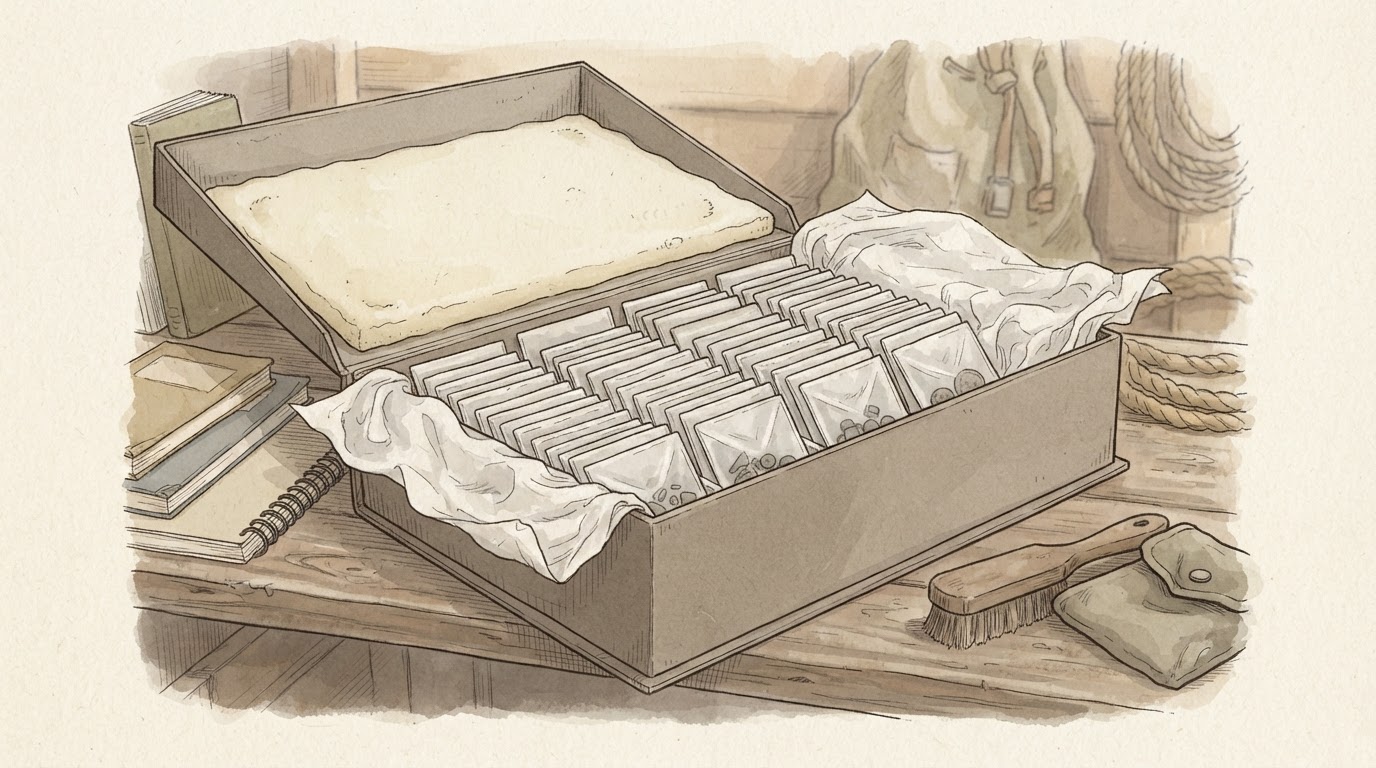
The solution is straightforward. Silica gel packets placed in an airtight container maintain dry conditions by absorbing excess moisture. A storage box with a humidity indicator card lets you monitor conditions, keeping relative humidity within safe conservation ranges. Label coins with find details and store them in a cool, dark place.
Proper storage is non-negotiable. You could use the most expensive preservation product available and still watch a coin deteriorate if stored improperly. The product protects the surface; the environment protects the preservation.
Matching approach to your finds
Your method should reflect both find significance and storage capabilities.
For most situations, preservation cream works best. It prevents metal drying, maintains long-term stability, and enhances natural appearance without masking original material. For finds that might need FLO assessment, this respectful approach is essential.
Wax can be a budget option, but only with guaranteed dry storage conditions. The protective layer it creates is compromised by humidity, so unless you’re certain of maintaining proper humidity levels, the risk isn’t worth the savings.
Patina-building creams should be reserved for coins where the original surface is already damaged beyond preservation.
For high-value finds, potential Treasure, or anything headed to an FLO, preservation cream is the clear choice. The small additional cost is insignificant compared to the risk of irreversible patina loss.
Practical applications:
- Reportable or high-value finds: Preservation cream offers the best material respect and long-term stability
- Regular detecting activity: Cream provides consistent performance without compromising authenticity
- Budget-conscious with controlled storage: Wax is acceptable only with guaranteed humidity management
- Coins with surface damage: Patina-building creams may be appropriate for cosmetic improvement
Quick reference: protection methods
| Method | Best Use Case | Application | Long-term Effectiveness |
|---|---|---|---|
| Preservation Cream | Most situations, especially reportable finds | Cotton swab | High (nourishes existing surface) |
| Wax | Budget option with controlled dry storage | Soft cloth, buffed | Medium (requires humidity control) |
| Patina-Building Cream | Creating new patina on damaged metal | Cotton swab | Not for preservation |
| Silica Gel | Essential storage component | Packet in container | Critical for all methods |

Common preservation questions
Can I use water to clean coins?
Yes—a soft toothbrush and clean water can remove loose soil without damaging patina. Brush gently parallel to the surface rather than scrubbing, and ensure the coin is completely dry before applying any preservation product. If you encounter active corrosion or loose material, stop and seek professional advice.
What are the legal considerations?
While the Treasure Act 1996 governs treasure reporting rather than patina specifically, it does require careful handling of finds. The Portable Antiquities Scheme advises leaving items with conservation issues undisturbed and avoiding cleaning that damages archaeological value. For potentially reportable finds, clean gently, dry thoroughly, store properly, and report promptly.
What’s the best long-term storage method?
An airtight container with silica gel packets, stored in a cool, dark place, provides ideal conditions. Label each coin with find details for future reference. Check silica gel periodically and reactivate or replace as needed. Humidity indicators offer practical monitoring for regular use.
From the moment a coin leaves the ground, you’re responsible for maintaining the chemical stability it developed over centuries. Preservation cream generally outperforms wax for historical accuracy, but neither can compensate for poor storage conditions. The humble silica gel packet does more for long-term patina survival than any cream or wax applied without proper environmental control.
Many detectorists don’t realise that the Finds Liaison Officer network exists partly to advise on exactly this question—when patina is stable mineralisation versus active corrosion needing professional intervention. Your FLO is a practical conservation resource, not just a reporting contact.
Before your next outing, consider how you’ll handle any significant finds you might uncover. Our Free Metal Detecting Permission & Reporting Checklist covers the essential steps for both securing land access and managing discoveries responsibly.
Essential conservation references
- Portable Antiquities Scheme (PAS)
- Treasure Act 1996
- National Council for Metal Detecting (NCMD)
- Countryside and Rights of Way Act 2000
- Ancient Monuments and Archaeological Areas Act 1979
Related Guides
For a complete overview, see our How to Clean Metal Detecting Finds Without Damaging Them .
This article provides general guidance. For specific conservation advice concerning valuable finds, consult a qualified conservator or Finds Liaison Officer.