Should You Clean a Coin Before Reporting It as Treasure in the UK?
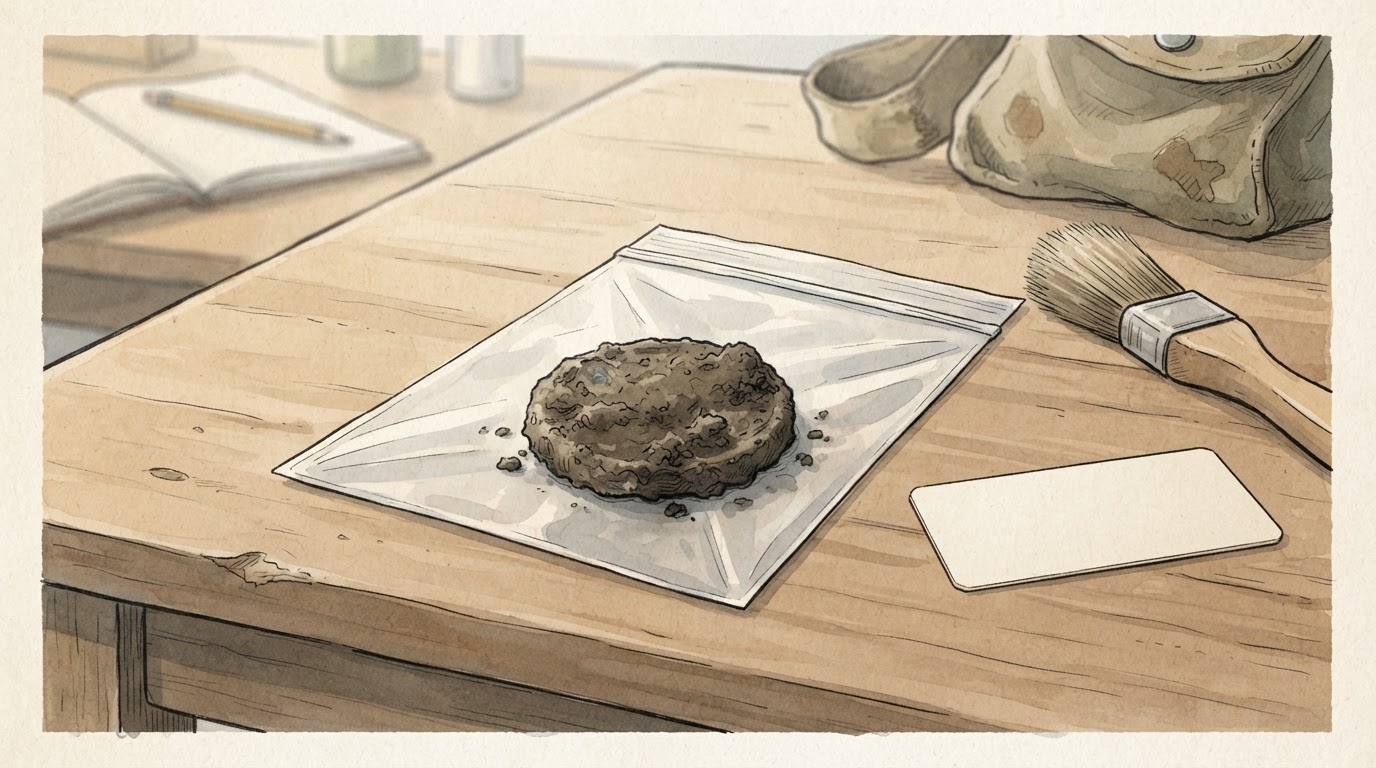
At a coroner’s inquest into a potential treasure find, the coin’s surface condition at the time of reporting becomes part of the evidential record. A cleaned coin arrives with its stratigraphic and chemical evidence already destroyed—making cleaning a legal problem before it is a conservation one. The Treasure Act 1996 Code of Practice warns that inappropriate cleaning may damage an object and reduce its archaeological and commercial value.
Never clean a coin before reporting it. Scrubbing that surface can destroy the very evidence that defines its legal status and ultimate value.
What cleaning removes from the record
A coin’s surface tells a story that cleaning can erase. The patina—the dark, crusty layer built up over centuries—holds crucial evidence. Mint marks, wear patterns, and specific corrosion types help experts determine age, origin, and burial conditions. Removing this layer makes identification, dating, and valuation significantly harder for professionals.
Treasure is defined by specific legal criteria. Broadly, it includes objects made of precious metal above a certain age, objects found as part of a hoard, and certain other categories of archaeological significance. A coin that appears to be insignificant copper might actually be an important hammered silver piece once an expert examines its surface details. The distinction often hinges on fine features that cleaning can destroy.
Your local Finds Liaison Officer (FLO), working with the Portable Antiquities Scheme (PAS), needs to examine the coin in its as-found state to determine if it meets the legal definition of treasure. Their assessment is compromised when the surface has been altered.
The legal clock and its consequences
The 14-day reporting clock starts ticking from the moment you realise a find might be treasure, or 14 days after first finding it. Cleaning the item doesn’t pause this deadline—a crusty, unidentified coin still needs reporting within that window.
Failing to report a treasure find can result in an unlimited fine or up to three months’ imprisonment under the Treasure Act 1996. The obligation is mandatory, and the “leave it alone” rule exists to prevent accidental violations.
Avoid all cleaning methods—including chemicals, abrasives, or water—on any find that might be treasure.
The threshold for reporting is straightforward: you don’t need to be certain something is treasure before reporting it. Report anything that might qualify within 14 days, leaving it exactly as found.
Immediate steps after discovery
When you uncover a potentially significant coin, focus on preservation and documentation rather than cleaning.
If possible, photograph the coin in the ground before removal—these in situ shots contribute to the archaeological record. Take clear shots in natural light from multiple angles, including the edge. Use your smartphone’s macro mode to capture fine detail on dark or corroded surfaces without cleaning or wiping the object.
Contact your local FLO through the Portable Antiquities Scheme (finds.org.uk) within the 14-day window. They’ll ask about the find spot, circumstances, and the object’s appearance before advising on next steps.
If the find is declared treasure, the FLO will oversee its professional assessment. Any cleaning required will be handled by a trained conservator using methods designed to preserve evidential value. This is fundamentally different from amateur cleaning.
For non-treasure finds confirmed by the FLO, the cleaning decision typically rests with you and the landowner. Some landowners prefer finds left in their original state as part of the site’s archaeological record.
When cleaning might be considered
The strict “no cleaning” rule applies specifically to potential treasure. For clearly non-treasure items like modern coins or bottle caps, gentle cleaning may be acceptable once the FLO has confirmed their status and you have the landowner’s agreement.
However, if there’s any doubt about an item’s significance, the safe approach remains unchanged: leave it untouched until an FLO has examined it. The assumption that something is “probably nothing” has led to the damage of many important finds.
Essential reporting procedures
| Action | Timing | Critical Details |
|---|---|---|
| Document the Find | Immediately | Photograph in situ and after recovery |
| Report Potential Treasure | Within 14 days | From when you suspect it might be treasure |
| Contact FLO | Promptly | Via the Portable Antiquities Scheme |
| Professional Assessment | After reporting | Conducted by FLO and conservators if needed |
| Cleaning (Treasure) | Only if professional | After assessment by a conservator |
| Cleaning (Non-Treasure) | After confirmation | With landowner’s agreement |
Your role in the process
The desire to clean a find stems from curiosity, but it addresses the wrong need. A clean coin isn’t required for reporting; an intact one is. “Intact” means preserving every speck of soil and corrosion exactly as it emerged from the ground.
Your practical needs are simple: photograph the find, store it securely, report it to your FLO within 14 days, and await instructions. The FLO will determine if it proceeds as treasure and what happens next.
Facing a significant find unprepared wastes the opportunity to properly document it. Get the Free Metal Detecting Permission & Reporting Checklist and keep it handy—it includes the key reporting steps you’ll need when that moment arrives.
The same restraint that protects a Treasure find—photograph, bag, report—is also the best practice for any find that might later prove more significant than it first appeared, making the no-cleaning rule a general field habit rather than a special-case rule.
Related Guides
For a complete overview, see our What Counts as Treasure Under UK Law? The Treasure Act 1996 Explained .
This guidance provides general information. For specific legal advice concerning treasure finds, consult the relevant authorities or a qualified professional.